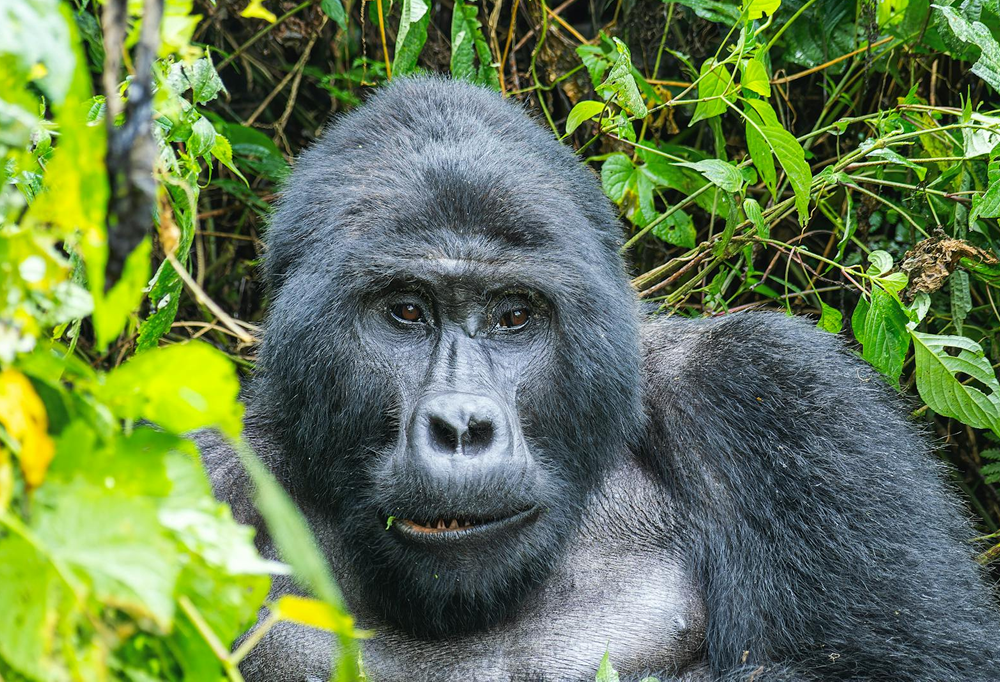

After hours spent trekking through the misty forest in search of mountain gorillas, I thought I had experienced the most powerful moment of my journey. Sitting in the thick undergrowth, watching a silverback gently groom his young, felt like an ancient privilege. But it wasn’t until the following day, when I walked down a winding trail outside Bwindi Impenetrable Forest, that I encountered a story just as moving, one not told by the animals, but by the people who once lived among them.
The Batwa, often called the “forest people,” are one of Uganda’s oldest communities. For generations, they lived in the Bwindi forest as hunters and gatherers, moving lightly across the land and depending on its rhythms for survival. They knew the forest not as a destination, but as home. When the area was declared a national park to protect the endangered gorillas, the Batwa were relocated, losing access to the forest that had sustained their way of life. Today, through cultural visits supported by local organizations, they share their stories and skills with visitors. That is how I found myself spending a morning with them, still reflecting on the day before, but preparing to see the forest through entirely different eyes.
The visit began with a warm welcome, direct and completely genuine. A group of men and women, dressed in traditional bark cloth and beads, greeted us with a song. Their voices rose in harmony as they clapped and danced, dust rising from the dry ground beneath their feet. It was a performance, yes, but not a show. The energy in their singing spoke of pride and memory. You could feel it.
Our guide, a young man from the community, led us through a recreated Batwa homestead tucked into the foothills near the forest boundary. He spoke softly, pausing often, translating as elders explained how they once made fire without matches, used herbs for medicine, and hunted small animals with bows and snares. He showed us how banana fibers were woven into ropes, how tree bark was stripped for cloth, and how honey was harvested from the high branches of the forest canopy. Everything was done with intention, nothing wasted.
What struck me most was the storytelling. An elder woman, hunched but strong, sat us in a circle and began to speak, not just about techniques or tools, but about life. She talked about births under tree cover, ceremonies beside streams, and how the sounds of the forest shaped their songs and dances. Her stories were punctuated by laughter, long pauses, and the occasional translation from our guide. Her face lit up when she described how children used to play in the vines, or how young hunters were taught to move without sound. She spoke not in past tense, but in memory, as if the forest still whispered to her each morning.
Later, we were invited to join in a traditional dance. I hesitated, unsure of my steps, but the rhythm was contagious. Drums beat steadily, and before long, I was dancing alongside the same people who had welcomed me hours earlier. There was no distance between us, only shared movement, dust, and breath.
As we sat for a simple lunch prepared by the community, I found myself thinking less about conservation and more about justice. The Batwa are no longer allowed to live in the forest, but they carry its story with them. Their resilience is quiet, but unwavering. They have found a way to adapt, to preserve what they can, and to remind visitors like me that wildlife protection must also include human dignity.
Walking back to my lodge, the forest looked different. The vines, the birdsong, even the moss-covered trees seemed heavier with meaning. I had come for gorillas. I had expected awe. But what stayed with me the longest was the Batwa’s way of seeing, not as visitors or protectors, but as part of the forest itself. And for a few hours, through their stories and songs, they invited me to see it that way too.