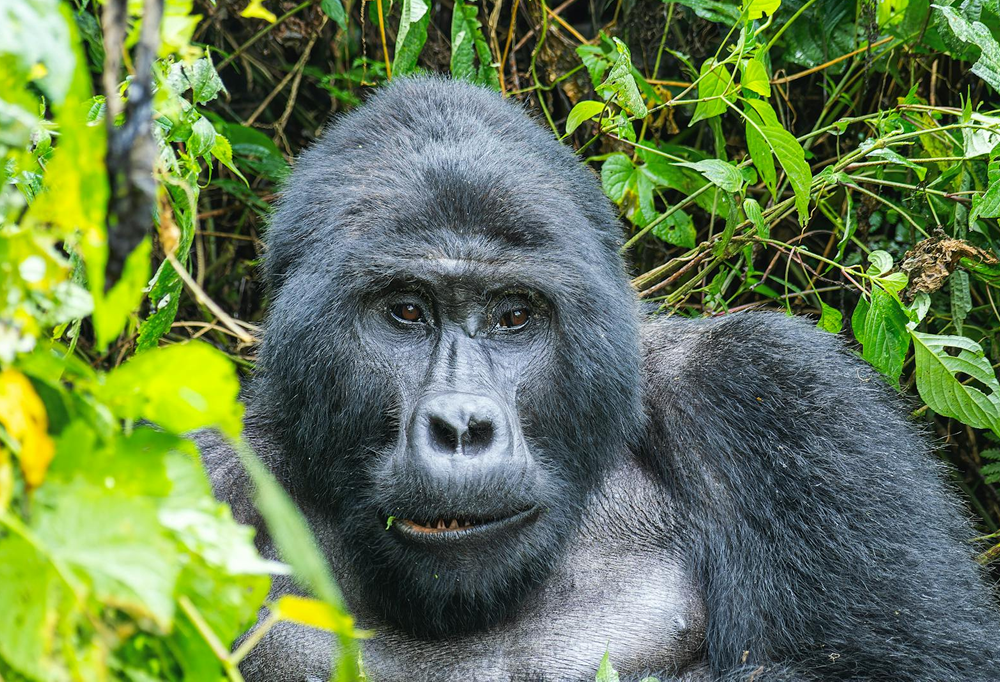
Mountain gorillas are found in Uganda at Bwindi Impenetrable Forest. Tourists from around the globe flock to Uganda to witness the majestic mountain gorillas, the world’s largest primates. These gentle creatures offer a glimpse into our evolutionary past, fueling the theory that humans share a common ancestry with apes. Few experiences are as unforgettable as tracking mountain gorillas in their natural habitat.
The Unique Behavior Mountain Gorillas Mountain gorillas are known for their social behaviors—playing, fighting, and bonding in ways that mirror human interactions. Observers, including National Geographic presenters, note that young gorillas, typically aged three to six, exhibit behaviors reminiscent of children in a kindergarten setting. They spend their days playing, climbing trees, and swinging from branches, emphasizing the importance of play in both gorillas and humans.
Mountain gorillas have Complex Social Structures when mature, their social dynamics become more competitive. Each group is led by a dominant male known as a silver back, recognized by the silver fur on his back. This powerful leader organizes the troop’s daily activities, including feeding and nesting. The silver back’s role is crucial, as he not only protects his group but also competes with rival silver backs, often leading to fierce confrontations.
Threats to Survival and Conservation Efforts Mountain gorillas face significant threats from habitat loss and poaching. However, awareness and conservation initiatives are growing. The Uganda Wildlife Authority is actively engaging local communities to emphasize that these incredible creatures are valuable assets that require protection. The legacy of conservationist Dian Fossey lives on, inspiring efforts to safeguard mountain gorillas and their habitats.
Intelligence and Diet Known for their intelligence, mountain gorillas have demonstrated problem-solving abilities. They often use tools, such as broken bamboo shoots, to extract ants from their nests. Their diet is diverse, with gorillas consuming over 100 different types of foliage, primarily roots, shoots, and fruits.
Reproductive Habits and Lifespan Female mountain gorillas
generally give birth to a single infant after a gestation period of nearly nine months. Newborns are small and dependent, but they quickly adapt to climbing on their mothers’ backs from a young age. In the wild, mountain gorillas can live up to 35 years, while those in captivity have been known to reach ages of 50 years or more.
Conclusion Visiting Uganda to observe mountain gorillas is not just a journey into the wild; it’s an opportunity to connect with our closest relatives and support their conservation. By participating in responsible ecotourism, visitors contribute to the ongoing efforts to protect these incredible primates. Join the adventure of a lifetime and experience the awe-inspiring world of mountain gorillas in Uganda.